Sewer Line Repair for Delray Beach Homes
Request an estimate for sewer repair
A sewer line problem can start small. One slow drain turns into gurgling toilets, a bad smell, or sewage in the tub. At that point the main line is usually blocked or broken. This page lays out what to do first, what the signs mean, and what your repair options look like.
Specialistwage Plumbing is a referral service. We do not do the work. We connect homeowners across the Delray Beach area with independent providers in our network who handle blocked pipe services, camera inspections, and sewer line repair. Use this page to sort urgent from non-urgent, learn the terms, and know what to ask before anyone starts digging or cutting.
Sewage Backing Up? Do These Steps First
Sewage is a health risk. Work through this list in order.
- First, stop using water. No flushing, showers, laundry, or dishwasher.
- Next, keep kids and pets out of the wet area.
- Do not touch sewage with bare hands. Wear gloves and boots if you must go in.
- If water is near outlets or appliances, turn off power to that area only if it is safe to reach the panel.
- Open a window for air if the smell is strong.
Then reach out for help.
Next, Confirm It Is the Main Line
Not every slow drain is a sewer problem. One clogged sink is usually a local drain issue. If several drains act up at once, the main line is the likely cause.
Check these:
- A toilet gurgles when the washer drains.
- A shower or floor drain backs up when you flush.
- The bottom-floor fixture fills with water first.
Sometimes emergency drain clearing in the main line gets things moving again. Other times the pipe itself is cracked or collapsed. A provider can tell which one you have.
Signs Your Sewer Line Is Failing
Some signs show up before a full backup. Watch for these:
- Slow drains in more than one fixture
- A sewer smell indoors or in the yard
- Wet, sunken, or unusually green patches in the lawn
- New cracks in a slab or tile floor
- Rodents or insects coming from drains
Two or more of these together is a good reason to book an inspection.
What Damages Sewer Lines
- Roots. They seek moisture and slip into small gaps at joints.
- Age. Homes built from the 1970s on may have clay, cast iron, or fiber pipe that wears out.
- Shifting ground. Soil that swells and dries can pull joints apart.
- Grease and wipes. They build up and form a plug.
- Heavy flow. Storm water entering the system can overload weak sections.
Why Humid Weather and Storms Matter
Warm, wet climates speed up root growth. Almost daily summer storms soak the ground. Saturated soil can shift pipes and push water into cracks.
Hurricane season runs June to November. Heavy rain and flooding can overwhelm the system and cause backups. If your line is already weak, a big storm often exposes it.
For planned work, ask a provider about timing. Drier months can make digging easier and scheduling less crowded. Do not wait if you already see signs of trouble.
How Providers Diagnose the Problem
Expect these steps, in this order:
- The provider asks about symptoms and which fixtures are affected.
- The line may be cleared first so a camera can pass.
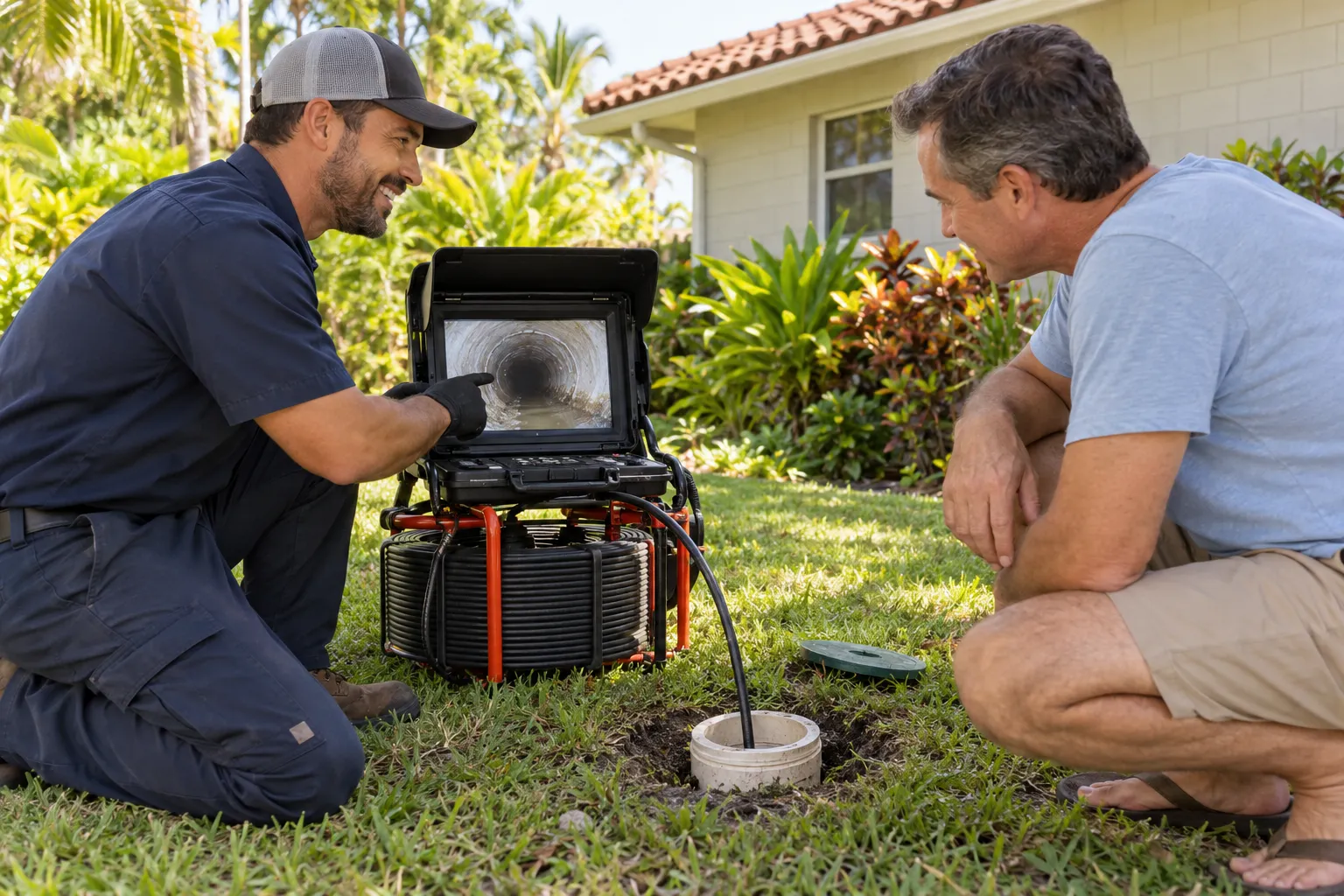
- A small camera runs through the pipe and records what it finds.
- A locator marks the depth and path of any break above ground.
Ask for a copy of the video. It helps you compare quotes.
Know Your Options
The right fix depends on the camera results. Here are the common paths, from least to most work.
Option 1: Clearing the Line
A blockage with no pipe damage may only need cleaning. This is the lightest option. If roots caused it, they may grow back.
Option 2: Spot Repair
If one section is broken, a provider may replace just that piece. This suits a single crack or offset joint.
Option 3: Pipe Lining
A resin liner is placed inside the old pipe. It forms a new pipe wall with little digging. It works when the pipe is still mostly in shape.
Option 4: Full Replacement
A collapsed or badly worn line may need to be replaced. Methods include open trenching or trenchless pipe bursting. Ask which suits your yard.
Homes on Slabs and Condos
Many local homes are concrete block on slabs. Pipes under the slab are harder to reach. A provider may cut the slab, tunnel under it, or reroute the line outside.
In condos and some subdivisions, the line may be shared. Check with your association before work starts. A backup in your unit may come from a shared pipe.
Permits and Property Lines
The sewer line runs from your house to the main in the street. You often own the part on your property. The city or utility may own the rest.
- Many areas require a permit for sewer line repair or replacement.
- Ask the provider who pulls the permit.
- Call before digging so buried utilities are marked.
Insurance and Documentation
Some policies may cover sudden damage. Gradual wear is often excluded. Check your policy. Providers can often help document damage for a claim, so ask for photos and the camera video.
Questions to Ask the Provider
- Can I see the camera footage?
- Which repair options fit my pipe?
- Will the quote be in writing, with the scope listed?
- Who handles permits and yard cleanup?
- How much of my slab, tile, or landscaping will be affected?
What Happens After You Reach Out
First, you share your situation. Next, Specialistwage Plumbing connects you with an independent provider in our network. Then the provider inspects the line and gives you a written quote. You decide before any work begins.
What's Included
Camera Inspection
A small camera shows what is wrong inside the pipe so you can choose a fix.
Line Clearing
Blockages from grease, wipes, or roots can be cleared so water moves again.
Spot Repair or Lining
Some damage needs only a short section replaced or a liner added inside.
Full Replacement
A collapsed or worn-out line may need a new pipe, trenched or trenchless.
Typical Sewer Line Repair Costs
Prices vary by pipe depth, length, access, and local rules. These are typical U.S. ranges only. Get a written quote that lists the scope before you approve any work.
| Item | Typical range | Notes |
|---|---|---|
| Camera inspection | $100 – $500 | Often includes a recording of the pipe |
| Main line clearing | $150 – $600 | Roots may return over time |
| Spot repair | $1,000 – $4,000 | Depends on depth and access |
| Pipe lining | $80 – $250 per foot | Less digging, needs a solid pipe |
| Full replacement | $3,000 – $25,000 | Length, depth, and method drive price |
| Permits and cleanup | $50 – $1,500 | Varies by local rules |
How It Works
Stop the Water
Stop flushing and running water. Keep people and pets away from any sewage.
Describe the Problem
Share which drains are affected and any smells or wet spots you notice.
Get Matched Locally
Specialistwage Plumbing connects you with an independent provider in our network.
Review the Written Quote
Read the findings and scope, then decide whether to approve the work.
Why Call Specialistwage Plumbing
Options Before Work
You learn the repair paths and key terms before anyone arrives.
Local Providers
Specialistwage Plumbing connects you with independent providers who serve homes across the Delray Beach area.
Clear Next Steps
A short, organized path from first symptom to written quote, without guesswork or pressure.
No Obligation
Request an estimate and decide on your own. You are not required to book.
Other Services
Need sewer line repair in Delray Beach?
Describe your plumbing problem and request an estimate. Specialistwage Plumbing will connect you with an independent local provider in the Delray Beach area.
No obligationSewer Line Repair FAQ
How do I know if my sewer line is broken or just clogged?
A clog in one fixture is usually local. If several drains back up, gurgle, or smell, the main line is likely the cause. A camera inspection shows whether it is a blockage or a crack.
Can tree roots really damage a sewer line?
Yes. Roots seek moisture and can slip into small cracks or loose joints. Once inside, they grow and block the pipe. In warm, humid areas, roots often grow faster, so recurring clogs are a common warning sign.
Does homeowners insurance cover sewer line repair?
Some policies may cover sudden damage, but gradual wear is often excluded. Check your policy and ask about sewer backup coverage. Providers can often help document the damage for a claim.
Request a callback
Describe your plumbing problem and request an estimate. Specialistwage Plumbing will connect you with an independent local provider in the Delray Beach area.
No obligation